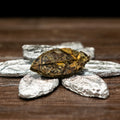
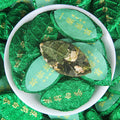
Preparing Pu-Erh tea is much more than simply pouring hot water over tea leaves—it is a journey of discovery, almost an art form. Unlike a simple tea bag, Pu-Erh invites you to take your time and enjoy the process. From the moment you break off a piece of the pressed tea cake to the enjoyment of the last infusion, a world of flavors unfolds. This tea rewards careful preparation with an incomparable taste experience.
Before we get into the details of preparation, it is good to know that there are two main types of Pu-Erh: raw Sheng and ripe Shou. Sheng Pu-Erh matures naturally over many years, while Shou Pu-Erh undergoes an accelerated fermentation process through controlled humidity and temperature. In the end, both are aged teas—just aged in very different ways.
Simply put, Sheng is closer to green tea, while Shou is similar to black tea. This distinction is also important for preparation, as both types require slightly different water temperatures and steeping times.
Pu-Erh Collection


Sale price
173,00 zł100g
1.480,00 zł / kg

Sale price
198,00 zł100g
1.680,00 zł / kg

Sale price
198,00 zł100g
1.680,00 zł / kg

Sale price
994,00 zł540g
1.090,00 zł / kg
Unit price1.090,74 zł / kg
Sale price
188,00 zł100g
1.600,00 zł / kg

Sale price
232,00 zł100g
1.970,00 zł / kg

Sale price
104,00 zł60g
1.460,00 zł / kg
Unit price1.100,00 zł / kg
Sale price
346,00 zł200g
1.460,00 zł / kg

Sale price
371,00 zł260g
1.200,00 zł / kg

Sale price
94,00 zł5g
16.000,00 zł / kg

Sale price
89,00 zł5g
15.200,00 zł / kg

Sale price
89,00 zł70g
1.080,00 zł / kg

Sale price
242,00 zł100g
2.050,00 zł / kg


Sale price
114,00 zł60g
1.610,00 zł / kg

Sale price
144,00 zł80g
1.520,00 zł / kg

Sale price
104,00 zł40g
2.220,00 zł / kg


Sale price
70,00 zł60g
980,00 zł / kg

Sale price
64,00 zł40g
1.370,00 zł / kg

Sale price
59,00 zł25g
2.000,00 zł / kg


Sale price
672,00 zł505g
1.120,00 zł / kg


Sale price
556,00 zł275g
1.240,00 zł / kg
You can learn more about production and effects in our main article on the benefits of Pu-Erh tea – this knowledge provides a solid foundation.
In this guide, we focus entirely on the practical aspects. We guide you step by step through the entire process: from choosing the right utensils and the appropriate method to the crucial parameters such as water temperature and steeping time. Whether you are a beginner or an experienced tea lover, here you will find everything you need for the perfect cup of Pu-Erh tea.
Preparation: Tools and breaking the tea cake
Good preparation is the first step to a perfect cup of Pu-Erh. Before the tea goes into the water, you should have the right tools ready. Depending on the preparation method, you will need different utensils:
- Modern tools: To start with, all you need is a large cup or glass and a spacious, separate strainer. The strainer is crucial in this method to completely separate the tea leaves from the water after brewing and prevent a bitter aftertaste. A more convenient alternative is a modern pot with an integrated filter, such as the Tipod teapot or – ideal for on the go – the teapot with strainer and double bottom.
- Traditional tools: For an authentic experience, a gaiwan (a porcelain lidded bowl) or a teapot made of Yixing clay is suitable. The traditional gongfu ceremony can be complemented by additional accessories, such as a glass cha hai with a double bottom for even distribution of the tea, a tea ceremony set made of bamboo, and classic porcelain tea cups “River Dragon Dilong”.
Since Pu-Erh is usually pressed into a solid cake, a special Pu-Erh knife or a sturdy letter opener is essential for gently removing the tea from the cake. The most important part of the preparation is breaking the tea cake correctly. The aim is to loosen the leaves without breaking or crumbling them. To do this, carefully insert the knife between the layers of the cake from the side. Then gently lever it upwards and repeat the process in different places until a suitable piece comes loose. For safety reasons, never point the blade towards yourself.
This step is crucial because broken tea leaves have a much larger surface area and release bitter substances too quickly. A carefully separated piece with intact leaves, on the other hand, guarantees a clear and complex flavor over many infusions. If the leaves are badly broken, it is advisable to significantly reduce the steeping time, especially for the first few infusions, to avoid excessive bitterness.
The 3 most important preparation methods
The world of Pu-Erh is diverse, and so is its preparation. There is no one right way. Whether you are short on time, want to hold a traditional ceremony, or simply want to enjoy a cup of tea, there is a suitable method for every situation. We will introduce you to the three most important ones.
For quick enjoyment: the Grandpa Method (Grandpa Style)
The “Grandpa Method” or “Grandpa Style” is the simplest and probably most uncomplicated way to prepare Pu-Erh tea. It is widely used in China and perfect for carefree everyday enjoyment without any accessories. All you need is a large cup or a heat-resistant glass. This method is ideal for getting a first impression of a new tea and observing its behavior over a longer period of time.
The preparation is very simple: Put a small amount of tea leaves (approx. 3-4 grams) directly into your cup. Then pour hot water over it until the cup is about three-quarters full. Wait a moment until the tea has reached a pleasant drinking temperature and the leaves have sunk a little. Now you can drink directly from the cup. When the cup is about half empty, simply refill it with hot water. You can repeat this process several times throughout the day.
The Western standard: preparation in a teapot
This method is familiar to many tea drinkers and is ideal if you want to prepare a larger quantity of Pu-Erh. It is straightforward and only requires a teapot with a spacious strainer in which the leaves can unfold freely. The preparation follows simple steps:
- Preheat the teapot: Briefly rinse the empty pot with hot water. This prevents the brewing water from cooling down too quickly and keeps the temperature stable.
- Measure out the tea: Place the tea leaves in the strainer. A good starting amount is about 5 to 6 grams of tea per 500 ml of water. Adjust the amount depending on the desired strength.
- Pour in the water: Fill the pot with hot water. Note: For Shou Pu-Erh (aged), use approx. 95–100 °C, for Sheng Pu-Erh (raw), use approx. 85–95 °C. It is best to pour the water in an arc over the leaves to wet them evenly.
- Steep: The correct steeping time for Pu-Erh tea is 2 to 3 minutes. With a new tea, it is advisable to start with a shorter steeping time to test the intensity.
- Serve: After steeping, remove the strainer to prevent a bitter aftertaste. Now you can pour the finished tea into cups and enjoy.
Several infusions are also possible with Pu-Erh tea. To do this, extend the steeping time by about one minute for each additional infusion.
The traditional art: the Gongfu method
The Gongfu method is more than just a preparation method—it is a tea ceremony in miniature. The term “Gongfu” means “skill acquired through practice” and describes a mindful and precise approach to getting the maximum potential out of the tea leaves. The basic principle is simple but effective: a relatively large amount of tea is infused with a small amount of water for a very short time. Instead of one large pot of tea, you get many small, intense infusions, each of which reveals the character of the tea in a new way.
A gaiwan or a small Yixing teapot (approx. 120-150 ml) are best suited for gongfu preparation. Here's how to do it:
- Preheat the teaware & measure out the tea: Rinse your brewing vessel (gaiwan/pot) and cups with hot water. Then add a generous amount of tea – about 5 to 8 grams per 120 ml of water.
- “Wash” (rinse) the tea: This step is essential in the Gongfu method. Pour hot water over the leaves and immediately pour away this first infusion after only 5-10 seconds. Note the variety: For matured Pu-Erh (Shou), you need 95–100 °C, while for raw Pu-Erh (Sheng), the ideal temperature is 85–95 °C. This washing cleans the leaves of tea dust, gently awakens them, and prepares them for the actual infusions.
- The first infusion: Pour hot water over the leaves again. The correct Pu-Erh tea steeping time for the first drinkable infusion is very short, only about 15 to 20 seconds.
- The “fairness pitcher” (Cha Hai): Pour the finished tea completely from the brewing vessel into a small serving jug, also called a “Cha Hai” or “jug of fairness.” This is important because the tea that comes out of the pot first is weaker than the tea that comes out last. Mixing in the jug ensures that each cup has exactly the same, consistent flavor.
- Enjoy further infusions: Serve the tea from this pot into small cups. For the next 2-3 infusions, you can maintain the steeping time or extend it by 5 seconds each time. High-quality Pu-Erh tea can yield 8, 10, or even more infusions, with each infusion revealing new facets of flavor.
This method transforms tea preparation into a conscious ritual. It is the best way to explore the multi-layered soul of a high-quality Pu-Erh tea and invites you to experiment to find your own personal taste moment.
Teaware Collection


Sale price
30,00 zł120g
160,00 zł / kg


Mastering the parameters: steeping time, temperature, and quantity
No matter which preparation method you choose, the flavor of your Pu-Erh tea will always be determined by three key parameters: steeping time, water temperature, and tea quantity. If you understand how these interact, you can perfectly tailor each infusion to your personal taste.
The right Pu-Erh tea steeping time
Steeping time is probably the parameter that allows you to most actively control the taste of your Pu-Erh tea. Especially with the Gongfu method, steeping times are often extremely short, only 10 to 20 seconds. This is due to the principle of this method: a large amount of tea leaves is used in a small amount of water. The large leaf surface area means that the flavors and ingredients are released into the water very quickly and intensely. Short steeping times prevent the infusion from becoming too strong or bitter and instead allow for many nuanced infusions.
What happens if you extend the steeping time? Every second counts. Extending the steeping time by just five to ten seconds can make the infusion noticeably stronger and more intense. Longer steeping times release more tannins and caffeine from the leaves, making the tea more bitter and stimulating. There is no right or wrong here. Experiment consciously with the time to find the perfect balance between mildness, complexity, and strength for you.
Multiple infusions with Pu-Erh tea
One of the most fascinating properties of Pu-Erh tea is its longevity. While most beverages are consumed after the first sip, the journey with Pu-Erh is just beginning. A high-quality pressed Pu-Erh, whether Sheng or Shu, is not made for just one infusion. It is designed to release its flavors slowly and in layers. Depending on the quality of the tea and the preparation method, 5 to 10 infusions are not uncommon. Many exceptional teas can even be infused 15 times or more.
The special thing about this is that each infusion offers a new taste experience. The first infusion may be strong and intense, while later infusions become softer, sweeter, or more mineral. The initial earthy notes of a Shu Pu-Erh can transform into sweet date or wood aromas. Observing and enjoying this development in flavor is at the heart of the Pu-Erh experience. It turns every cup of tea into a journey of discovery and is one of the main reasons why this tea is so highly prized.
Water temperature and quality
Unlike delicate green or white teas, Pu-Erh tea is very robust and can withstand high temperatures. In fact, it needs them to reach its full potential. The ideal water temperature for preparing Sheng and Shu Pu-Erh is between 95 and 100 °C. So you can use freshly boiled water that has only cooled down very briefly. Why is that? The tightly pressed and fermented leaves of Pu-Erh are very resistant. Only hot water can properly open the leaves and extract the deep, complex flavors without creating excessive bitterness.
In addition to temperature, the quality of the water also plays a role. Since tea consists of over 99% water, its quality has a significant impact on the taste. Hard, calcareous water can neutralize the delicate flavors of the tea. For a clear and nuanced taste experience, we therefore recommend using soft, filtered water.
Conclusion
As you have seen, the preparation of Pu-Erh tea is a fascinating world in itself. From the uncomplicated “grandfather” method to the meditative Gongfu ceremony, there is a suitable method for every mood and occasion. There are no strict rules, only guidelines that serve as a starting point. Think of preparing Pu-Erh tea as an exciting process of experimentation. Don't be afraid to play around with the amount, steeping time, or method. This is the only way to discover the countless facets of this unique tea and find the flavor that suits you perfectly.
Ready for your Pu-Erh journey?
Are you ready to begin your own journey into the world of Pu-Erh tea? Whether you are interested in raw Sheng, aged Shu, or the right accessories such as a Pu-Erh knife or a Gaiwan, you will find everything you need to get started here. Discover our selection now and experience the art of preparation for yourself!