There are many famous names in the world of Chinese tea, but only one truly bears the title “King of Oolongs.” Da Hong Pao, often translated as “Great Red Robe,” is much more than just a drink. It is a cultural phenomenon, a status symbol, and for connoisseurs, the epitome of what is known as “Yan Cha” – rock tea from the Wuyi Mountains. If you are looking for an oolong tea that exudes history and bridges the gap between the freshness of green tea and the depth of black tea in terms of flavor, you have come to the right place.
This strongly fermented, dark-roasted oolong captivates with its unique “terroir.” The tea bushes literally cling to the steep cliffs of the Wuyi Mountains in Fujian Province. The result is an unmistakable mineral note that experts refer to as “Yan Yun” (rock melody). But the effect of Da Hong Pao tea goes beyond its taste: in China, it is considered an elixir for the mind and body. In this article, we delve deep into the myths and show you how to prepare this treasure perfectly at home.
What is Da Hong Pao? Origin and legend
The authentic Da Hong Pao “Big Red Robe” from Fujian comes from one of China's most spectacular landscapes: the Wuyishan Mountains. This region is not only a UNESCO World Heritage Site, but also the spiritual home of oolong tea.
What makes this tea so special is its classification as “Yancha” or rock tea. Unlike plantation teas, the bushes here grow in rocky gorges where the soil is poor but rich in minerals. The roots of the plants have to penetrate deep into the crevices of the rocks to find water. It is precisely this struggle for survival that gives the tea its characteristic mineral core, which has made it famous worldwide.
The Legend of the Red Robe
The name “Da Hong Pao” (Great Red Robe) is inextricably linked to Chinese folklore. As with many historical treasures, there is not just one truth, but various narratives that underpin the mystical status of this tea.
Here are the two most well-known versions of the story:
- The Grateful Student: A young scholar was on his way to the imperial examination in Beijing when he fell seriously ill in the Wuyi Mountains. A local monk found him and gave him an infusion made from the leaves of the local tea bushes. The cure was almost instantaneous. The student continued his journey, passed the examination with top marks, and received a red robe of official rank as a reward. Out of gratitude, he returned and wrapped his red robe around the tea bushes that had saved him.
- The imperial mother: Another legend says that the mother of a Ming emperor was terminally ill. No medicine helped until tea was brought to her from the Wuyi Mountains. After drinking the tea, she recovered completely. The overjoyed emperor then sent large red robes made of the finest silk to protect the tea bushes from the cold in winter and to honor them as imperial suppliers.
The mother plants: Why this tea is worth millions
When you hear that Da Hong Pao may be the most expensive tea in the world, it is no exaggeration—it is a fact that needs explanation. It all revolves around the legendary six mother plants (mother bushes) that still grow today on a rock face in the Jiulong Valley (Valley of Nine Dragons).
These ancient shrubs are over 350 years old and are revered in China as national treasures. Until a few years ago, a tiny amount of tea was still harvested from them, but that came at a price:
- Astronomical values: At an auction in 2004, 20 grams of this original tea was sold for the equivalent of approximately 18,500 euros. That is many times the price of gold.
- The gift for presidents: When Richard Nixon visited China in 1972, Mao Zedong gave him 50 grams of this tea. Nixon was initially unimpressed until it was explained to him that this was half of the entire annual harvest of the mother plants – a gesture of inestimable value.
- Ban on harvesting: Since 2006, picking leaves from the mother bushes has been officially banned to ensure their survival. The last harvested tea went straight to the National Museum in Beijing.
So what are we drinking today? The Da Hong Pao you find in stores comes from direct genetic clones (offshoots) of these mother plants or is a masterful blend from the region. This makes it accessible without losing its exclusivity.
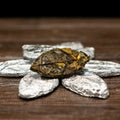
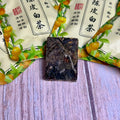
Modern variants such as the dark oolong “Da Hong Pao” from Hunan or special selections such as the Da Hong Pao “Lan Hua” from Fujian offer tea lovers the opportunity to experience the famous aroma profile without having to be an emperor. Pressed forms such as the Da Hong Pao “tea brick” from Fujian are also growing in popularity as they promote the maturation of the tea.
Production and taste: The secret of “Yan Yun”
When you experience the taste of Da Hong Pao for the first time, you will notice that it is fundamentally different from other oolongs. The secret lies in a term whispered with reverence among tea masters: “Yan Yun” (岩韵) or “rock melody.” It describes the unique sensation the tea leaves in the mouth and throat—a mineral freshness reminiscent of the spring water flowing over the rocks of the Wuyi Mountains.
But this taste is not just a gift from nature; it is the result of an extremely complex manufacturing process that can take months. The processing of rock tea is considered one of the most complicated in the entire tea world.
The journey from leaf to cup involves the following critical steps:
- Wilting and shaking: After harvesting, the leaves are wilted in the sun. A crucial step is shaking in bamboo baskets. This causes the edges of the leaves to break open slightly, the oxidation process to begin (“kill green”), and the typical aroma to start developing.
- Fermentation: Da Hong Pao is a heavily oxidized oolong (approx. 40–70%). The leaf loses its “green” grassiness and develops depth.
- Charcoal roasting (Hong Bei): This is the soul of the tea. The leaves are traditionally roasted over glowing charcoal. This process is often repeated several times, with rest periods of several weeks in between. This roasting “seals” the flavor and gives the tea its characteristic roasted notes.
The result of this craftsmanship is a Da Hong Pao flavor that unfolds in layers. It is not a tea that reveals everything immediately, but one that rewards patience.
Expect the following flavors:
- Base: A deep, warming roasted note, often compared to freshly baked bread or fine woods.
- Body: Notes of dark chocolate and caramel, paired with roasted nuts.
- Yan Yun: The famous mineral note that lingers on the palate.
- Finish: Surprising floral accents (often orchid) and a sweetness of dried fruit (plum, date) in the finish.
Effects and ingredients: Is Da Hong Pao healthy?
Many tea lovers ask themselves: Is Da Hong Pao healthy? In Chinese culture, tea is never considered merely a luxury item, but always a functional food as well. Rock tea from Wuyi occupies a special position here, as it combines the positive properties of green and black tea.
The effect of Da Hong Pao tea is often described as harmonizing. Unlike green tea, which can irritate the stomach, the strongly roasted oolong is considered very digestible and mild.
Here are the most important aspects of its effects:
- Digestion and metabolism: In China, Da Hong Pao is traditionally drunk as a digestif after heavy, fatty meals (such as dim sum). The polyphenols it contains can help break down fats in the body. If you want to lose weight with Da Hong Pao, you can drink the tea as a supplement, as it can gently stimulate the metabolism.
- Warming effect: Tea is classified in traditional Chinese medicine (TCM). While green tea has a “cooling” effect, Da Hong Pao is considered “warming” for the stomach due to its strong roasting. It is therefore ideal for the cold season or for people with sensitive stomachs.
- Energy without jitters: The tea contains caffeine, but has a different effect to coffee. Thanks to the amino acid L-theanine, the caffeine is released into the blood more slowly. This creates a state of alert relaxation (“zazen”) – ideal for mental work.
- Cell protection: Even though some vitamin C is lost during roasting, Da Hong Pao is still rich in antioxidants, which are important for the heart and blood vessels.
Are there any side effects of Da Hong Pao? As it is a caffeinated drink, people who are sensitive to caffeine should not drink it too late in the evening. However, compared to coffee, it is significantly lower in acidity and easier on the stomach. Excessive consumption on an empty stomach can cause mild dizziness (“tea drunk”) in very sensitive individuals, but in tea culture this is often perceived as a pleasant state of lightness.
Oolong Collection


Sale price
€29,80150g
€160,00 / kg


Sale price
€64,80100g
€540,00 / kg


Sale price
€17,90100g
€140,00 / kg


Sale price
€14,9050g
€260,00 / kg


Sale price
€14,9050g
€230,00 / kg

Sale price
€11,9050g
€190,00 / kg


Preparation: Gong Fu Cha and Gaiwan
To truly understand this exclusive tea, you should not “drown” it in a large Western teapot. You have to prepare Da Hong Pao correctly, and that means concentration, small utensils, and high heat. The traditional method is called Gong Fu Cha (the art of tea with effort/care).
The ideal tool for this is a gaiwan (a porcelain cup with a lid) or a small pot made of Yixing clay. Porcelain is better for beginners as it reproduces the aroma neutrally.
Here's how to perform the ritual step by step:
- Preparation: Preheat the utensils (gaiwan and bowls) with boiling water. Cold ceramics rob the tea of the heat it desperately needs.
- Dosage: Be generous. Fill the gaiwan about 1/3 to 1/2 full with dry leaves (approx. 5–8 grams per 100–120 ml). The leaves are voluminous and need space.
- Water temperature: Da Hong Pao is not a delicate green tea. It requires heat. Use water at 95–100°C. This is the only way to release the aromatic oil from the roasted leaves.
- Waking the leaves: Pour the water onto the leaves and pour it off again immediately (within 2–3 seconds). This first infusion is not drunk! It serves to remove the leaf dust and open the pressed leaves. The aroma that now rises from the moist gaiwan is the first moment of enjoyment.
The actual infusions follow a quick rhythm:
- 1st infusion: Steep for approx. 10–15 seconds. This infusion is often the most aromatic.
- 2nd to 4th infusion: Only extend the steeping time minimally (5 to 10 seconds each). This is where the full body and flavor unfold.
- From the 5th infusion onwards: Extend the time more significantly (30, 45, 60 seconds). A good Da Hong Pao can easily withstand 7 to 9 infusions (“steepings”).
It is often said that the first cup is for the aroma, the second for the flavor, and the third for the aftertaste (the Yan Yun). Take your time and observe how the mineral and fruity notes change with each infusion.
Storage and maturation
One of the most fascinating characteristics of Da Hong Pao is its longevity. Unlike green tea, which quickly loses its freshness and should be drunk within a year, a high-quality rock tea behaves more like a good wine. Thanks to its strong oxidation and traditional charcoal roasting, it has enormous maturation potential.
Many tea connoisseurs deliberately store their Da Hong Pao for several years (“aged oolong”). Over time, the initial, sometimes slightly harsh roasted notes (“fire flavor”) evaporate. The tea becomes rounder, smoother, and often develops even deeper fruity notes. A well-stored, aged Da Hong Pao can even be more valuable than a fresh one.
To ensure that this refinement is successful, you only need to follow a few important rules when storing it:
- Dryness: Moisture is the biggest enemy. Store the tea in an airtight container, ideally in a metal tin or a special ceramic jar.
- Darkness: Light destroys the aromatic substances. Glass jars are therefore unsuitable, unless they are stored in a cupboard.
- Odor neutrality: Tea absorbs foreign odors like a sponge. Never store it in the spice cabinet or next to coffee.
If you keep these points in mind, you can enjoy your Da Hong Pao for years to come and witness its flavor evolution.
Conclusion: A tea for special moments
Da Hong Pao is much more than just a thirst quencher. It is an invitation to pause and immerse yourself in a centuries-old tradition. Its history, told through legends of emperors and monks, gives it an aura that few other teas possess.
This “king of teas” may not be a drink for quick consumption between meals. It demands attention – both when preparing and enjoying it. But it rewards this effort with a taste experience that is as complex and profound as the rocky gorges of the Wuyi Mountains themselves.
Whether you are looking for its calming effect, are interested in its health benefits, or are simply curious about the famous “Yan Yun,” a cup of Da Hong Pao is always a little journey into the heart of ancient China. We invite you to discover this imperial pleasure for yourself and become part of the legend. Give it a try – perhaps the “Great Red Robe” will also become your new companion for special moments of tranquility.